
Reading time: 7 minutes |
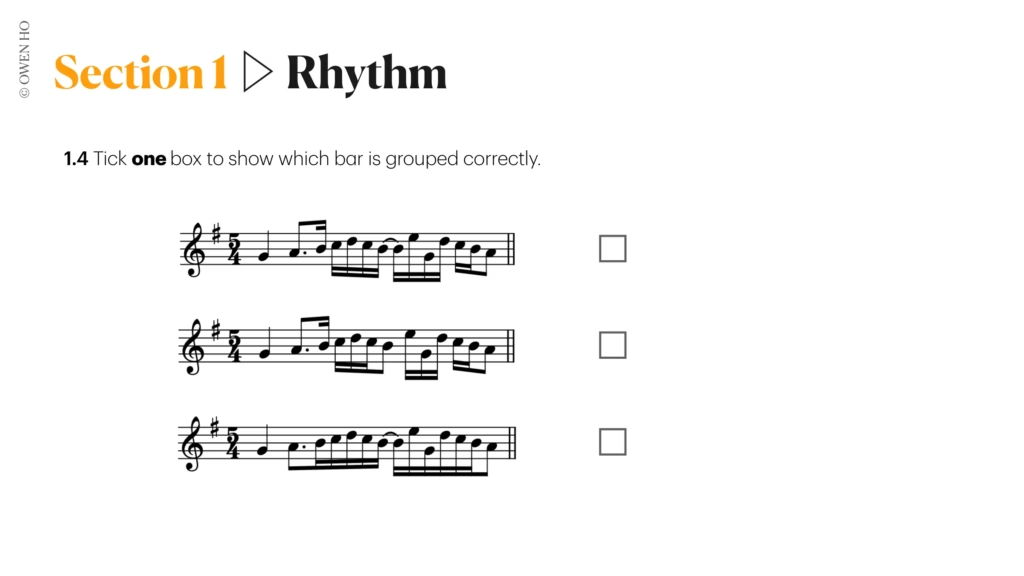
Section 1.4 of the ABRSM Grade 5 Music Theory exam tests your knowledge of note grouping. You’ll be given three options and asked to choose the one that reflects the correct grouping of notes.
At first glance, all the options might look similar—they often contain exactly the same total number of beats. The difference lies in how the notes are grouped and beamed.
Here’s everything you need to know to tackle these questions with confidence.
What Do Section 1.4 Questions Look Like?
You’ll be presented with a time signature and three bars of music. One of them is correctly grouped. Your job is to identify which one.
The trick? All three options usually add up to the same total beat value. The difference is in the beaming and grouping of the notes.
Three Types of Time You Need to Know
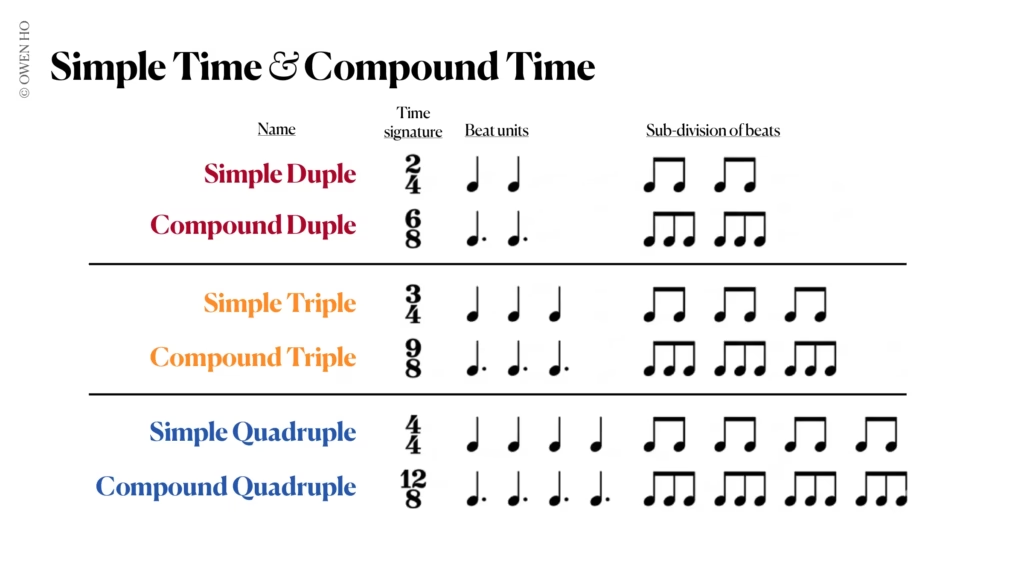
To answer these questions, you need to understand three types of time:
1. Simple Time
- Top numbers: 2, 3, or 4
- Beats subdivide into 2
- Examples: 2/4, 3/4, 4/4
2. Compound Time
- Top numbers: 6, 9, or 12
- Beats subdivide into 3
- Examples: 6/8, 9/8, 12/8
3. Irregular Time
- Top numbers: 5 or 7
- Beats do not divide evenly
- Examples: 5/4, 5/8, 7/8
Understanding Irregular Time
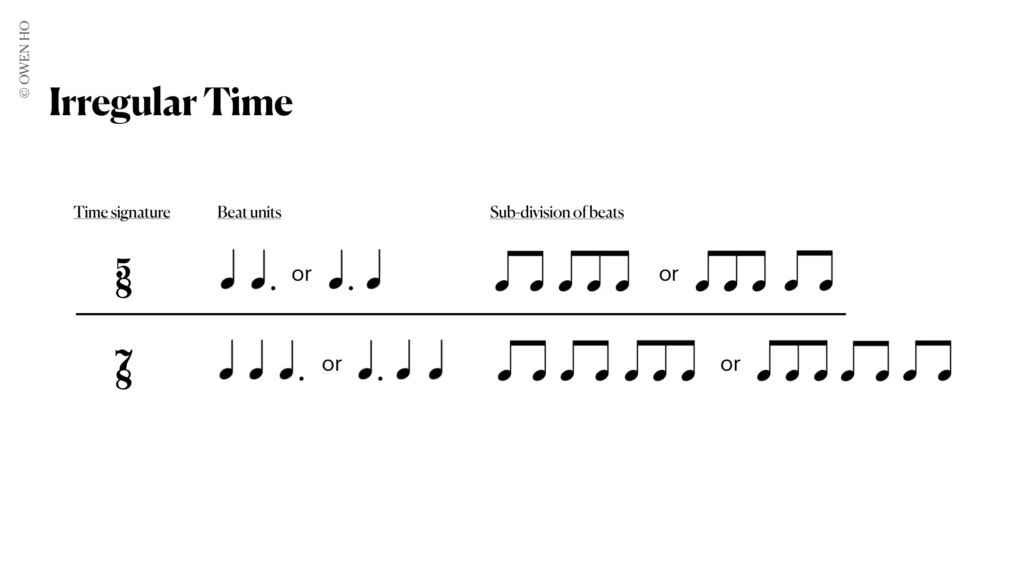
Irregular time signatures are the new concept in Section 1.4. They’re called “irregular” because the beats don’t divide evenly.
5/8 Time
Can be grouped as either:
- Crotchet + Dotted Crotchet (2 quavers + 3 quavers)
- Dotted Crotchet + Crotchet (3 quavers + 2 quavers)
7/8 Time
Can be grouped as either:
- Crotchet + Crotchet + Dotted Crotchet (2 + 2 + 3 quavers)
- Dotted Crotchet + Crotchet + Crotchet (3 + 2 + 2 quavers)
The key point: irregular times are never divided evenly, unlike simple time (divisible by 2) or compound time (divisible by 3).
Worked Example 1: 5/4 Time
Let’s walk through a question in 5/4.
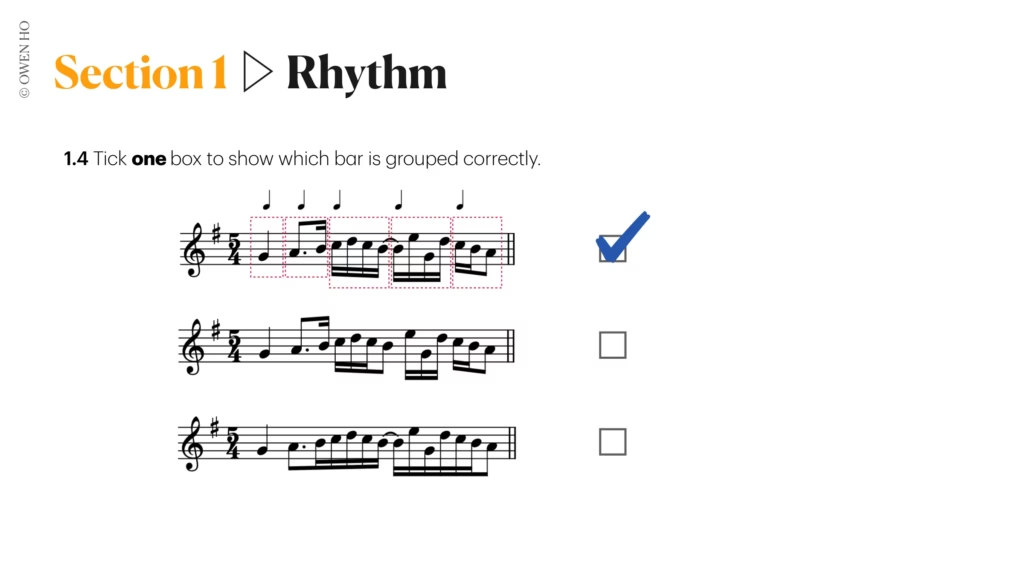
In 5/4, we’re looking for five crotchets in a bar.
The grouping should reflect either:
- 3 crotchets + 2 crotchets
- 2 crotchets + 3 crotchets
How to Identify the Correct Option
Look at the beaming. The correct grouping will show the beats clearly.
In the correct answer, you’ll typically see:
| Beat | Notes |
|---|---|
| 1 | A single crotchet |
| 2 | Dotted quaver + semiquaver (equals one crotchet) |
| 3 | Four semiquavers (equals one crotchet) |
| 4 | Four semiquavers tied together (equals one crotchet) |
| 5 | Quaver + two semiquavers (equals one crotchet) |
Important: Watch the Ties
If two notes are tied across a beat boundary, they should not be beamed together. The beaming should reflect the underlying beat grouping.
For example, if you have four semiquavers that cross over a crotchet beat boundary, they should be split into two separate groups with a tie between them—not beamed as one group of four.
Worked Example 2: 12/16 Time
Now let’s look at a 12/16 question.
In 12/16, we’re looking for four dotted quavers in a bar.
Step 1: Identify the Beat Unit
12/16 is compound quadruple time:
- 4 beats per bar
- Each beat = dotted quaver (3 semiquavers)
Step 2: Find the Four Groups
The correct option will show four clear groups, each adding up to one dotted quaver:
| Group | Notes | Total |
|---|---|---|
| 1 | Semiquaver + dotted semiquaver + demisemiquaver | 1 dotted quaver |
| 2 | Three semiquavers | 1 dotted quaver |
| 3 | Semiquaver + demisemiquaver + dotted semiquaver | 1 dotted quaver |
| 4 | Semiquaver + quaver | 1 dotted quaver |
The beaming should clearly separate these four groups.
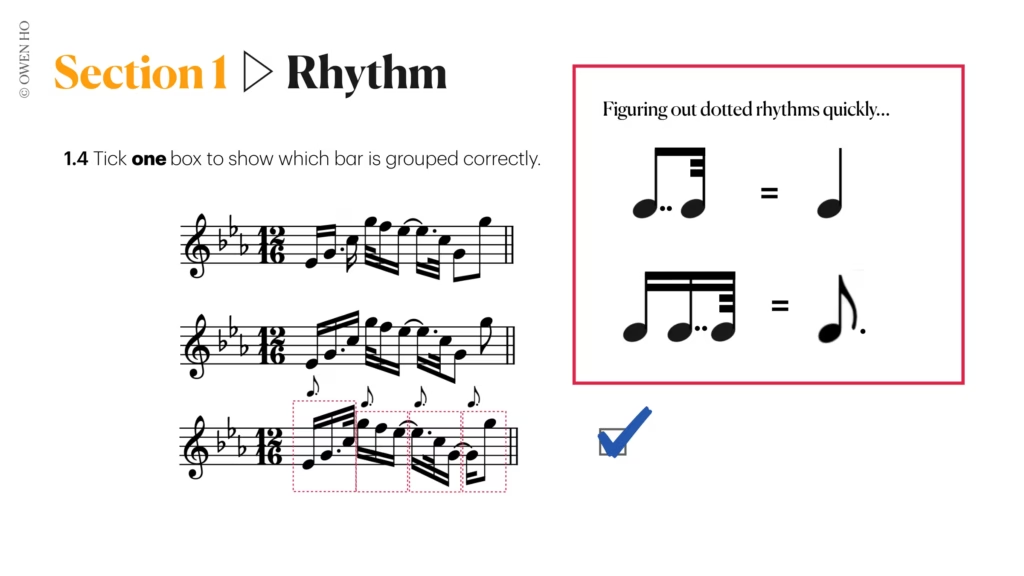
Quick Tip: Working with Dotted Note Rhythms
Dotted rhythms can be tricky to calculate. Here’s a handy trick.
Example 1: Dotted Quaver + Something
Imagine you have two quavers = one crotchet.
Now add a dot to the first quaver:
- To keep the total the same, you must divide the second note in half.
- So: Dotted quaver + semiquaver = one crotchet.
Add another dot to the first note?
- Divide the second note by half again.
- So: Double-dotted quaver + demisemiquaver = one crotchet.
Example 2: Dotted Note in a Group of Three
Imagine you have three semiquavers = one dotted quaver.
Now add a dot to the middle semiquaver:
- To keep the total the same, divide the following note by half.
- So: Semiquaver + dotted semiquaver + demisemiquaver = one dotted quaver.
The Shortcut
If you see a dotted note in a group:
- Remove the dot and remove a beam from the following note
- The total time stays the same
This makes it much easier to work out the note grouping!
Common Pitfalls to Avoid
- Don’t just count the total beats. All options usually have the same total. Look at the grouping instead.
- Pay attention to beaming. The beams should reflect the beat structure, not just connect all notes together.
- Watch for ties across beat boundaries. Tied notes should not be beamed together.
- Remember irregular time rules. 5/4 can be 3+2 or 2+3. 7/8 can be 2+2+3 or 3+2+2.
Practice Makes Perfect
Understanding the theory is one thing, but exam success comes from repeated, focused practice. That’s why my interactive practice site (app.owenmusictheory.com) can make all the difference in your preparation.
Here’s how the two practice modes work:

Drill Mode: Master One Section at a Time
Drill Mode is designed for targeted practice. You get access to all the questions organised section by section, just like the real exam. This means you can:
- Focus specifically on note grouping until it feels second nature
- Skip the sections you’re already confident in and spend your time where it matters most
- Practise the same question type repeatedly with virtually unlimited questions– you’ll never run out of fresh material
With instant feedback on every answer, you’ll learn from your mistakes immediately and reinforce correct answers right away.
Exam Mode: Simulate the Real Thing
When you’re ready to put it all together, Exam Mode gives you the full experience:
- Full-length papers in the exact format of the ABRSM exam
- Randomised questions each time you take a test – no two papers are the same
- A 2-hour time limit to help you build speed and stamina
- A final score and detailed feedback at the end, so you know exactly where you stand
This mode is invaluable for reducing exam-day anxiety. The more you practise under real conditions, the more confident you’ll feel when it counts.
Get Started
- Head to app.owenmusictheory.com
- Sign up free — no card required
- Try the free Pitch and Terms drills, or sit the free sample exam paper
- If it’s helping, upgrade for full access to every section and unlimited randomised papers
Grade 5 Theory is a one-time hurdle standing between you and your next practical grade. Practising smart — with realistic questions, instant feedback, and proper timed conditions — is the difference between walking in anxious and walking in ready.
Good luck!