
Reading time: 10 minutes |
Section 3.3 of the ABRSM Grade 5 Music Theory exam tests your ability to identify the key of a melody.
You’ll be given a question like this: “Circle the correct key of each of these three melodies.”
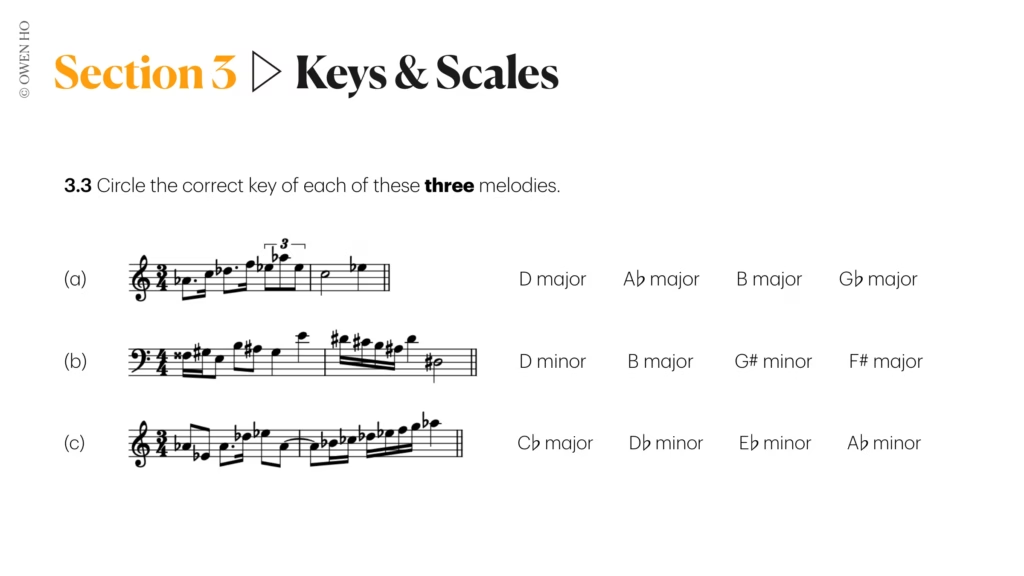
You’ll see three short melodies with options for both major and minor keys. Unlike previous sections, you’re not given a key signature—you have to work out the key from the accidentals in the music.
Here’s everything you need to know.
Quick Revision: Reading Major Keys
Sharp Keys
Look at the last sharp and go up one semitone.
| Key | Last Sharp | Up One Semitone |
|---|---|---|
| G major | F♯ | G |
| D major | C♯ | D |
| A major | G♯ | A |
| E major | D♯ | E |
| B major | A♯ | B |
| F♯ major | E♯ | F♯ |
| C♯ major | B♯ | C♯ |
Flat Keys
Look at the second last flat.
| Key | Flats | Second Last Flat |
|---|---|---|
| F major | B♭ | (only one – remember this!) |
| B♭ major | B♭, E♭ | B♭ |
| E♭ major | B♭, E♭, A♭ | E♭ |
| A♭ major | B♭, E♭, A♭, D♭ | A♭ |
| D♭ major | B♭, E♭, A♭, D♭, G♭ | D♭ |
| G♭ major | B♭, E♭, A♭, D♭, G♭, C♭ | G♭ |
| C♭ major | B♭, E♭, A♭, D♭, G♭, C♭, F♭ | C♭ |
Relative Minor Keys
Relative minor keys share the same key signature as their relative major keys.
The relative minor is always three semitones lower than the relative major.
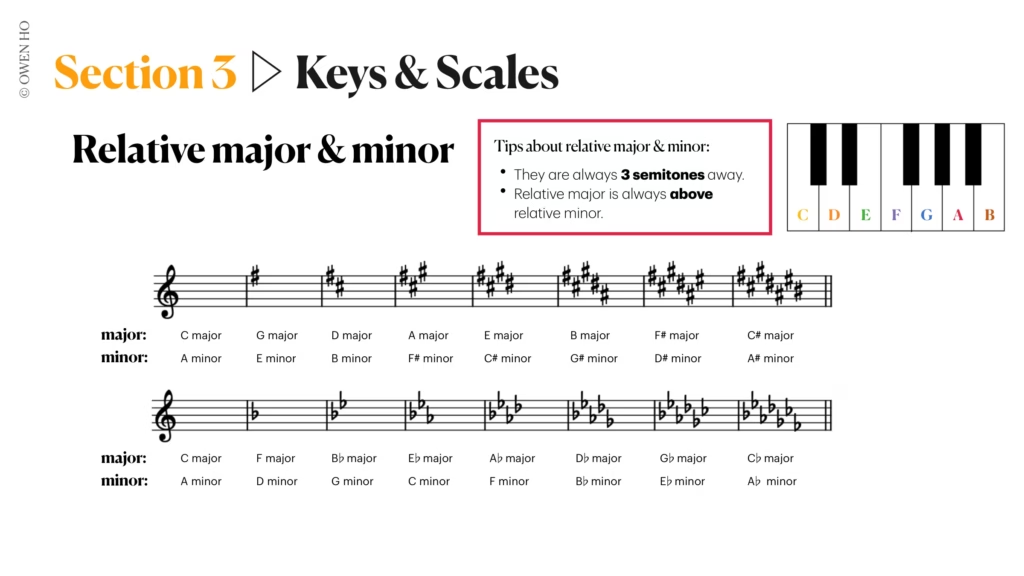
| Major Key | Relative Minor | Same Key Signature |
|---|---|---|
| C major | A minor | No sharps/flats |
| G major | E minor | 1 sharp (F♯) |
| D major | B minor | 2 sharps (F♯, C♯) |
| A major | F♯ minor | 3 sharps (F♯, C♯, G♯) |
| E major | C♯ minor | 4 sharps |
| B major | G♯ minor | 5 sharps |
| F♯ major | D♯ minor | 6 sharps |
| C♯ major | A♯ minor | 7 sharps |
| Major Key | Relative Minor | Same Key Signature |
|---|---|---|
| F major | D minor | 1 flat (B♭) |
| B♭ major | G minor | 2 flats (B♭, E♭) |
| E♭ major | C minor | 3 flats (B♭, E♭, A♭) |
| A♭ major | F minor | 4 flats |
| D♭ major | B♭ minor | 5 flats |
| G♭ major | E♭ minor | 6 flats |
| C♭ major | A♭ minor | 7 flats |
Three Types of Minor Scales
1. Natural Minor
Uses the key signature as written – no additional accidentals.
2. Harmonic Minor
The 7th note is raised by one semitone.
Example: C minor harmonic
- Key signature: B♭, E♭, A♭
- Scale: C – D – E♭ – F – G – A♭ – B♮ – C
3. Melodic Minor
- Ascending: The 6th and 7th notes are raised by one semitone
- Descending: No notes are raised (returns to natural minor)
Example: C minor melodic (ascending)
- C – D – E♭ – F – G – A♮ – B♮ – C
Example: C minor melodic (descending)
- C – B♭ – A♭ – G – F – E♭ – D – C
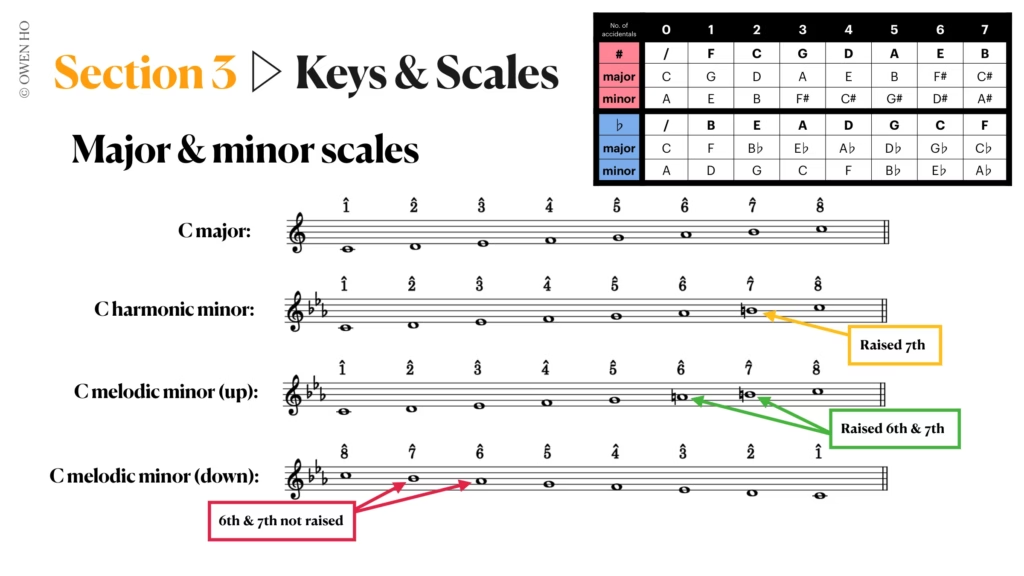
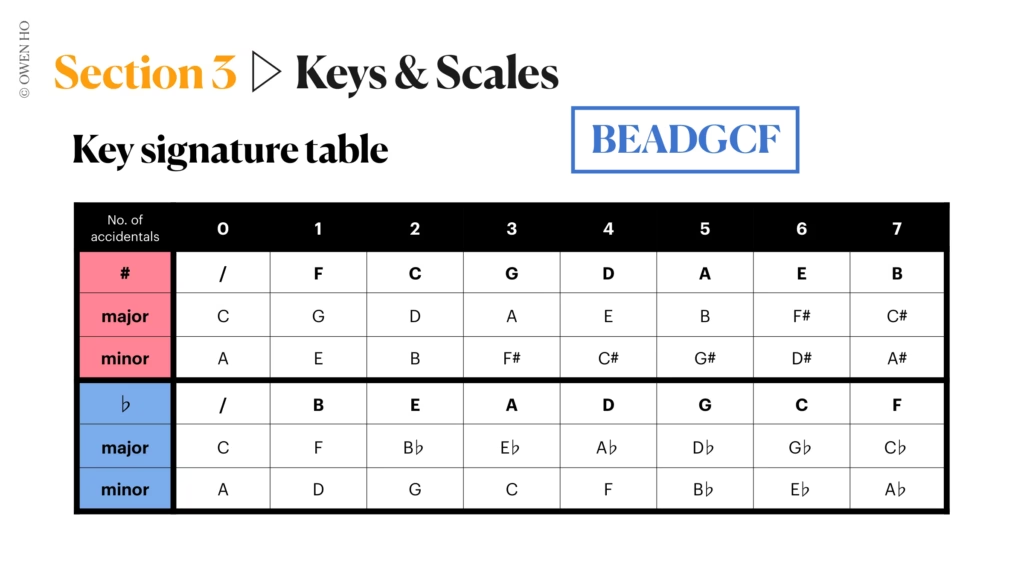
The Key Signature Table (Exam Cheat Sheet)
In the exam, you’re allowed to draw on blank paper. Drawing out this table can save you huge amounts of time across multiple sections.
How to Draw the Table
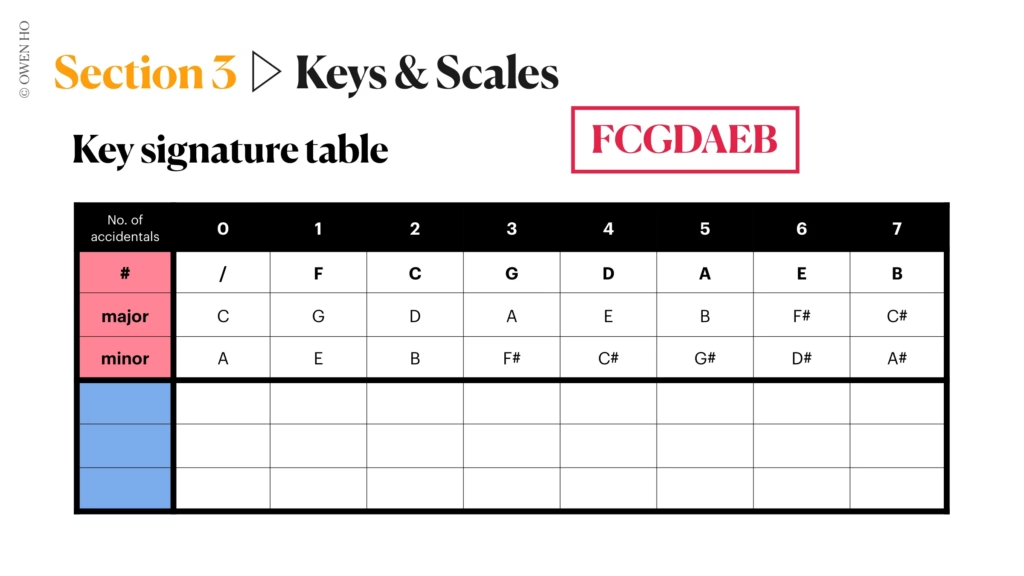
Step 1: Create 8 columns (0 to 7)
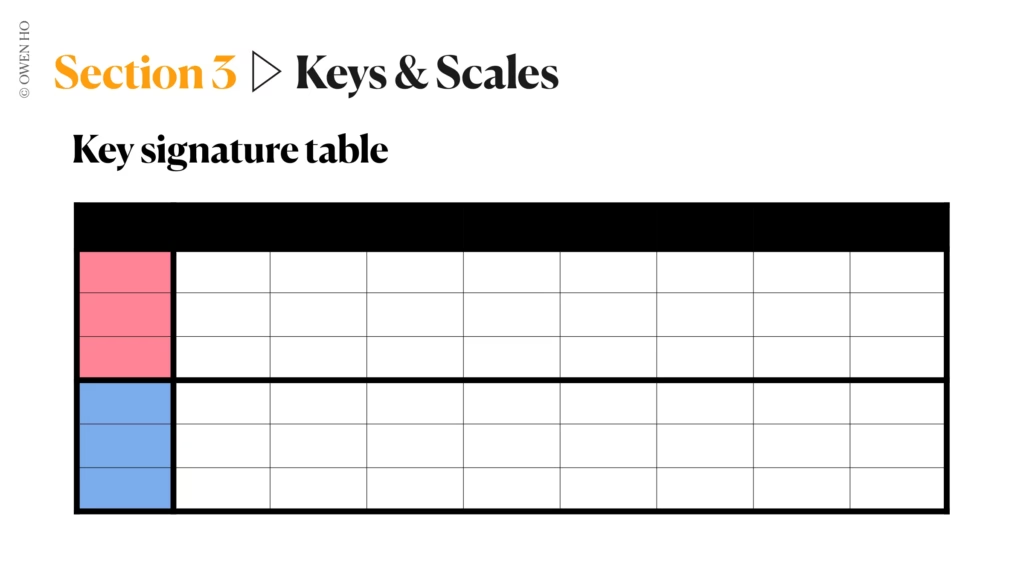
Step 2: Add the sharp row
| 0 | 1 | 2 | 3 | 4 | 5 | 6 | 7 |
|---|---|---|---|---|---|---|---|
| / | F♯ | C♯ | G♯ | D♯ | A♯ | E♯ | B♯ |
Step 3: Add major keys (sharp)
| 0 | 1 | 2 | 3 | 4 | 5 | 6 | 7 |
|---|---|---|---|---|---|---|---|
| / | F♯ | C♯ | G♯ | D♯ | A♯ | E♯ | B♯ |
| C | G | D | A | E | B | F♯ | C♯ |
Step 4: Add minor keys (sharp)
| 0 | 1 | 2 | 3 | 4 | 5 | 6 | 7 |
|---|---|---|---|---|---|---|---|
| / | F♯ | C♯ | G♯ | D♯ | A♯ | E♯ | B♯ |
| C | G | D | A | E | B | F♯ | C♯ |
| A | E | B | F♯ | C♯ | G♯ | D♯ | A♯ |
Step 5: Add the flat row
| 0 | 1 | 2 | 3 | 4 | 5 | 6 | 7 |
|---|---|---|---|---|---|---|---|
| / | B♭ | E♭ | A♭ | D♭ | G♭ | C♭ | F♭ |
| C | F | B♭ | E♭ | A♭ | D♭ | G♭ | C♭ |
| A | D | G | C | F | B♭ | E♭ | A♭ |
How to Use the Table
When you see a melody with accidentals:
- Check each column of the table against the accidentals in the melody
- Find the column that matches the accidentals present
- Consider whether it’s major or minor based on raised 6th/7th notes
Worked Example 1: A♭ Major
The melody contains: E♭, A♭, D♭ (B♭ is implied/absent)
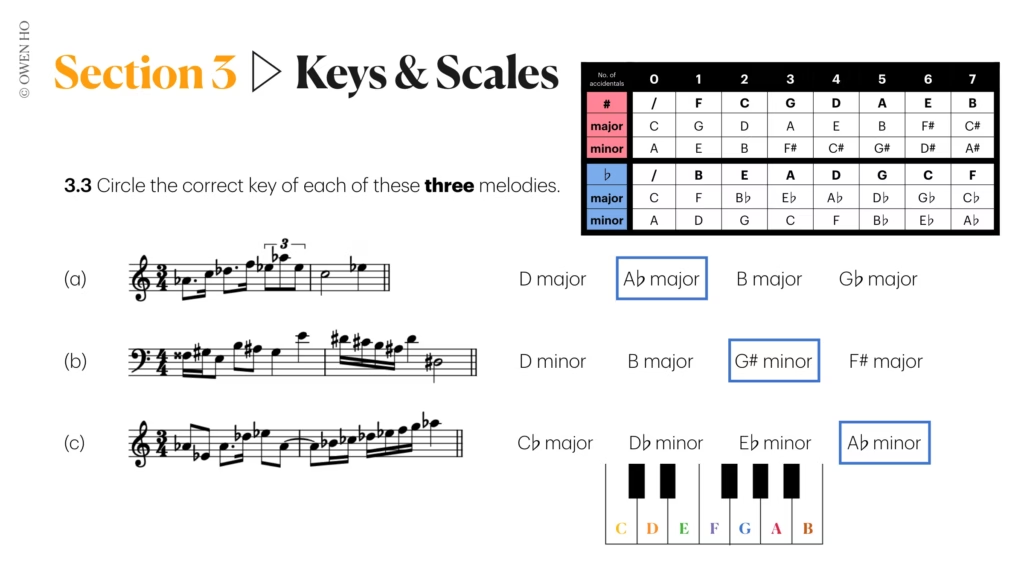
Step 1: Check the accidentals against the key signature table
| Accidental | Present in Melody? |
|---|---|
| B♭ | No (but no B note appears at all) |
| E♭ | ✅ Yes |
| A♭ | ✅ Yes |
| D♭ | ✅ Yes |
| G♭ | No |
| C♭ | No |
| F♭ | No |
The melody matches column 4 (B♭, E♭, A♭, D♭).
Step 2: Identify the possible keys in column 4
Column 4 = A♭ major or F minor
Step 3: Decide between major and minor
The melody has no raised 6th or 7th notes (no G♮ or F♮) – it simply follows the key signature. There’s no evidence of harmonic or melodic minor.
Answer
A♭ major ✅
Worked Example 2: G♯ Minor
The melody contains: F♯, C♯, G♯, D♯, A♯, and F𝄪 (F double sharp)
Step 1: Check the accidentals against the key signature table
| Accidental | Present in Melody? |
|---|---|
| F♯ | ✅ Yes (as F𝄪) |
| C♯ | ✅ Yes |
| G♯ | ✅ Yes |
| D♯ | ✅ Yes |
| A♯ | ✅ Yes |
| E♯ | No |
| B♯ | No |
The melody matches column 5 (F♯, C♯, G♯, D♯, A♯).
Step 2: Identify the possible keys in column 5
Column 5 = B major or G♯ minor
Step 3: Look for clues
There’s an F double sharp (F𝄪) in the melody.
- In B major, there are no double sharps – so B major is ruled out.
- In G♯ minor harmonic, the 7th note (F♯) is raised by one semitone → F𝄪.
Answer
G♯ minor ✅
Worked Example 3: A♭ Minor
The melody contains: B♭, E♭, A♭, D♭, C♭ (but no G♭ or F♭)
Step 1: Check the accidentals against the key signature table
| Accidental | Present in Melody? |
|---|---|
| B♭ | ✅ Yes |
| E♭ | ✅ Yes |
| A♭ | ✅ Yes |
| D♭ | ✅ Yes |
| G♭ | No |
| C♭ | ✅ Yes |
| F♭ | No |
This seems to skip a column – it has C♭ but not G♭. It matches column 7 (B♭, E♭, A♭, D♭, G♭, C♭, F♭) but with G♭ and F♭ missing.
Step 2: Consider melodic minor
The melody is ascending.
In a melodic minor scale ascending, the 6th and 7th notes are raised by one semitone.
If the key is A♭ minor (7 flats: B♭, E♭, A♭, D♭, G♭, C♭, F♭):
- The 6th note is F♭ → raised to F♮ (so no F♭ appears)
- The 7th note is G♭ → raised to G♮ (so no G♭ appears)
This explains why G♭ and F♭ are missing from the melody – they’ve been raised!
Answer
A♭ minor ✅
Summary Table
| Example | Accidentals Found | Column | Possible Keys | Clue | Answer |
|---|---|---|---|---|---|
| 1 | E♭, A♭, D♭ (B♭ implied) | 4 | A♭ major / F minor | No raised 6th/7th notes | A♭ major |
| 2 | F♯, C♯, G♯, D♯, A♯, F𝄪 | 5 | B major / G♯ minor | F𝄪 = raised 7th in G♯ harmonic minor | G♯ minor |
| 3 | B♭, E♭, A♭, D♭, C♭ (no G♭, F♭) | 7 (with raised 6th/7th) | A♭ minor | Missing G♭ and F♭ = raised 6th/7th in ascending melodic minor | A♭ minor |
The Detective Method (Recap)
When identifying keys from accidentals alone:
- List all the accidentals in the melody
- Match them to a column in the key signature table
- Identify the possible major/minor keys in that column
- Look for raised notes (6th and 7th in melodic minor, 7th in harmonic minor)
- Decide if it’s major or minor
Common Pitfalls to Avoid
- Ignoring raised notes in minor scales. The 6th and 7th notes may be raised, so they won’t match the key signature.
- Assuming it’s major. Always consider the minor option too.
- Forgetting the melodic minor descending pattern. The 6th and 7th notes are only raised when ascending.
- Not using the key signature table. It saves time and reduces errors.
How Many Marks Is This Worth?
Key identification questions appear throughout the exam. Understanding keys and scales is essential for:
- Section 3 (Keys and Scales)
- Section 4 (Intervals)
- Section 5 (Chords)
That’s 30 marks out of 75 in total – so getting this right is crucial.
Practice Makes Perfect
Understanding the theory is one thing, but exam success comes from repeated, focused practice. That’s why my interactive practice site (app.owenmusictheory.com) can make all the difference in your preparation.

Here’s how the two practice modes work:
Drill Mode: Master One Section at a Time
Drill Mode is designed for targeted practice. You get access to all the questions organised section by section, just like the real exam. This means you can:
- Focus specifically on key identification until it feels second nature
- Skip the sections you’re already confident in and spend your time where it matters most
- Practise the same question type repeatedly with virtually unlimited questions – you’ll never run out of fresh material
With instant feedback on every answer, you’ll learn from your mistakes immediately and reinforce correct answers right away.
Exam Mode: Simulate the Real Thing
When you’re ready to put it all together, Exam Mode gives you the full experience:
- Full-length papers in the exact format of the ABRSM exam
- Randomised questions each time you take a test – no two papers are the same
- A 2-hour time limit to help you build speed and stamina
- A final score and detailed feedback at the end, so you know exactly where you stand
This mode is invaluable for reducing exam-day anxiety. The more you practise under real conditions, the more confident you’ll feel when it counts.
Get Started
- Head to app.owenmusictheory.com
- Sign up free — no card required
- Try the free Pitch and Terms drills, or sit the free sample exam paper
- If it’s helping, upgrade for full access to every section and unlimited randomised papers
Grade 5 Theory is a one-time hurdle standing between you and your next practical grade. Practising smart — with realistic questions, instant feedback, and proper timed conditions — is the difference between walking in anxious and walking in ready.
Good luck!