Reading time: 6 minutes |
Sections 6.1 and 6.2 of the ABRSM Grade 5 Music Theory exam test your knowledge of musical terms, signs, and ornaments.
In Section 6.1, you’ll be asked to identify the meaning of musical terms and signs. In Section 6.2, you’ll need to recognise written-out ornaments.
Here’s everything you need to know.
Section 6.1: Musical Terms and Signs
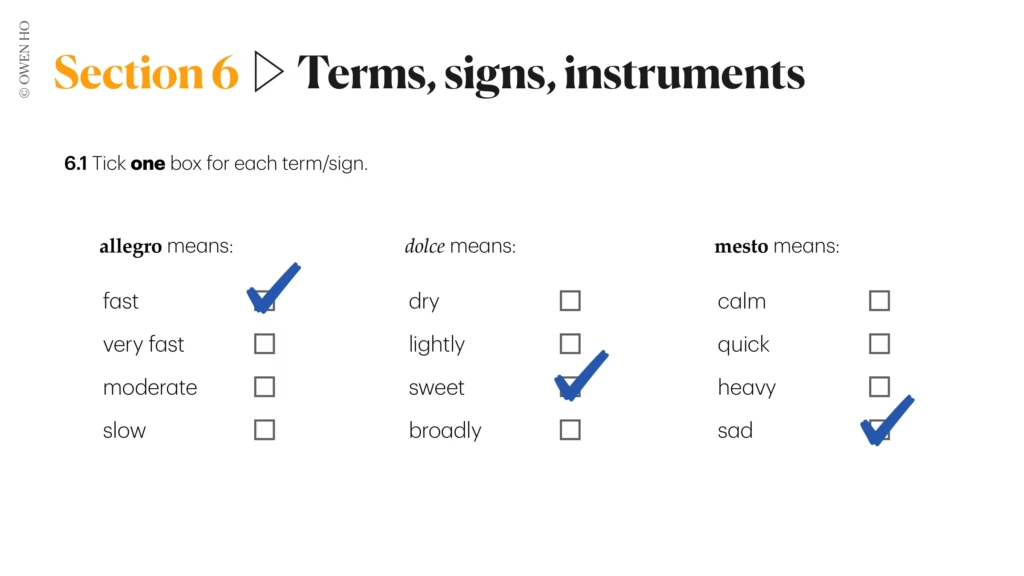
In this section, you’ll see questions like:
- “Pick one box for each term or sign.”
- “Allegro means…” → Fast
- “Dolce means…” → Sweet
- “Mesto means…” → Sad
There are always three questions in the exam related to terms or signs.
How to Prepare for Section 6.1
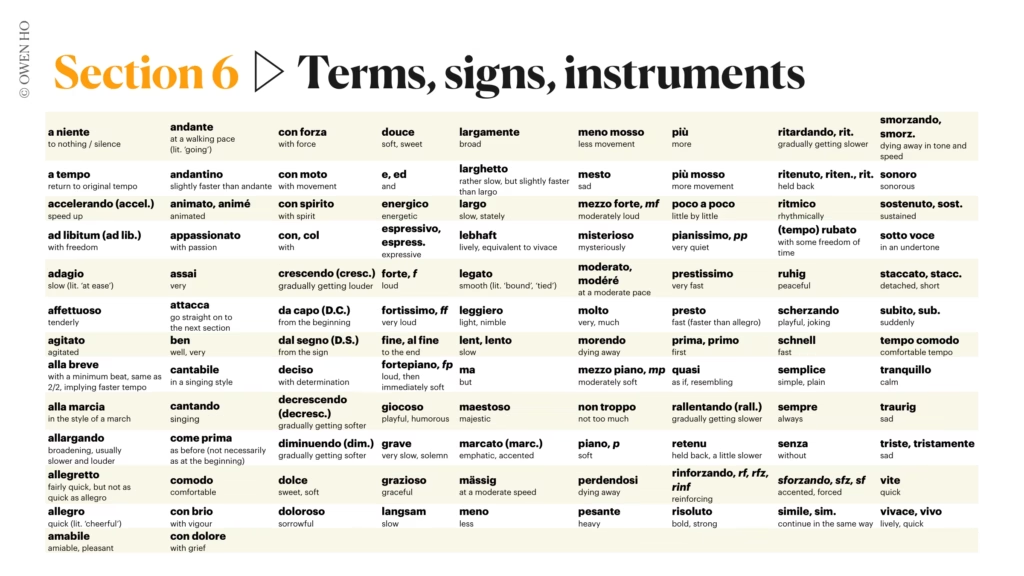
The ABRSM provides an official list of all the words that could appear in the exam. These are mostly Italian terms, with a few French and German ones.
Tips for Memorisation
- Don’t try to memorise everything at once. Spread your workload over several weeks.
- Learn a few words every day. Consistency is key.
- Use flashcards. Write the term on one side and the meaning on the other.
- Group by category. Group terms by tempo, dynamics, articulation, etc.
Key Categories of Terms
| Category | Examples |
|---|---|
| Tempo | Allegro (fast), Adagio (slow), Andante (walking pace) |
| Dynamics | Piano (soft), Forte (loud), Crescendo (getting louder) |
| Articulation | Staccato (detached), Legato (smooth), Marcato (accented) |
| Expression | Dolce (sweet), Mesto (sad), Con brio (with vigour) |
| Style | Cantabile (singing), Maestoso (majestic) |
Articulation and Signs
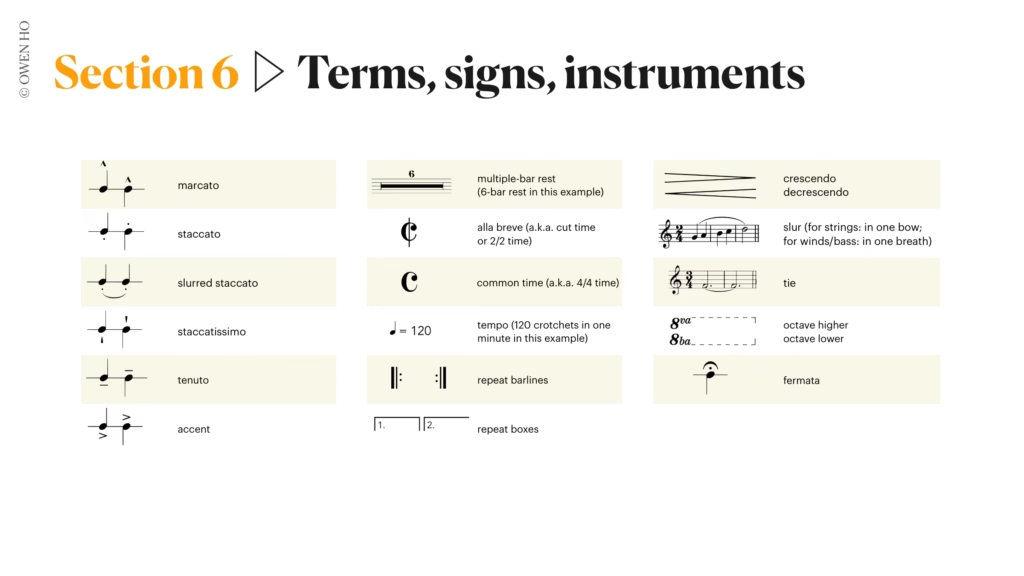
You also need to know common articulation signs:
| Sign | Meaning |
|---|---|
| Staccato (•) | Play short and detached |
| Staccatissimo (▼) | Very short and detached |
| Accent (>) | Play with emphasis |
| Marcato (^) | Strongly accented |
| Slur (curved line) | Play smoothly (legato) |
| Tenuto (–) | Hold for full value |
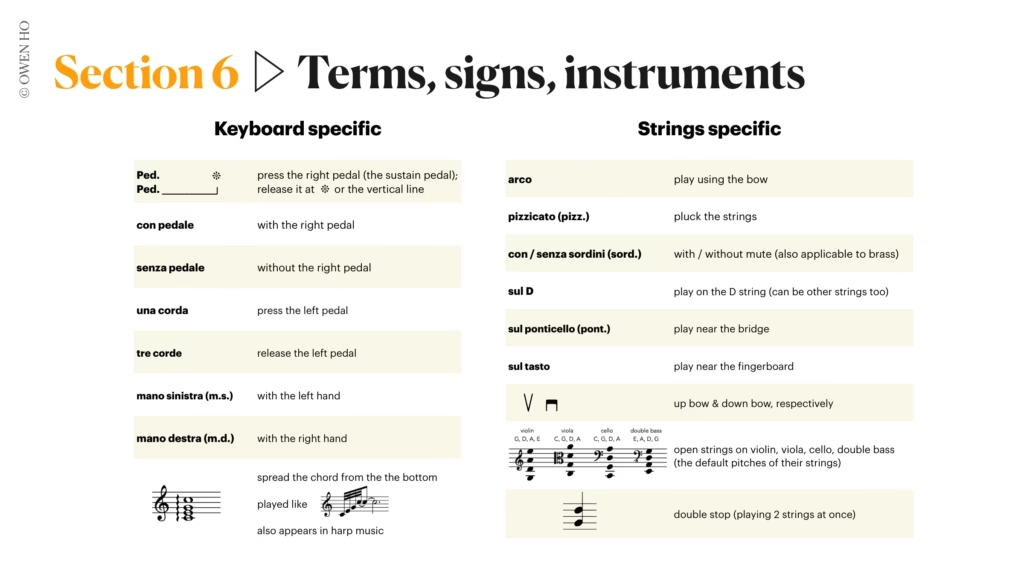
Instrument-Specific Terms
Keyboard Instruments (Piano)
| Term | Meaning |
|---|---|
| Ped. | Use the sustain pedal |
| Senza Ped. | Without pedal |
String Instruments (Violin, etc.)
| Term | Meaning |
|---|---|
| Arco | Play with the bow |
| Pizzicato (pizz.) | Pluck the strings |
| Con sordino | With mute |
| Senza sordino | Without mute |
Section 6.2: Ornaments
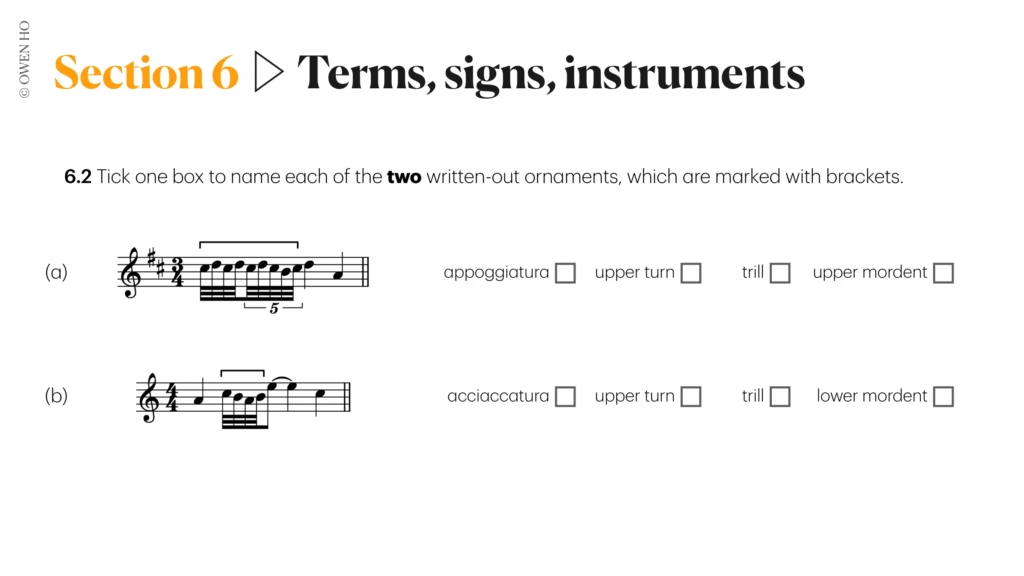
In this section, you’ll see written-out ornaments and need to identify which ornament they represent.
The Five Ornaments You Need to Know
1. Trill (Tr)
Sign: Tr or Tr with a wavy line
Effect: Alternate rapidly between the written note and the note above.
Realisation: D – E – D – E – D – E – D (continues for the duration of the note)
Important: A trill can end in different ways (with or without a turn at the end).
2. Mordent (Modern Mordent)
Sign: A short wavy line with a vertical line through it.
Effect: Play the written note, the note above, then the written note again.
Realisation: D – E – D (three notes, very quick)
3. Inverted Mordent
Sign: A short wavy line without a vertical line (or with a vertical line below).
Effect: Play the written note, the note below, then the written note again.
Realisation: D – C – D (three notes, very quick)
4. Turn (Upper Turn)
Sign: A symbol that looks like a sideways ‘S’ (𝆗).
Effect: Play the note above, the written note, the note below, then the written note again.
Realisation: E – D – C – D (for a D with a turn)
Placement matters:
- Above the note: The turn is played within the note’s value
- After the note (pushed to the side): The turn is played after the note
5. Acciaccatura (Grace Note)
Sign: A small note with a line through the tail.
Effect: Play the small note as quickly as possible before the main note.
The main note keeps its full value.
6. Appoggiatura
Sign: A small note without a line through the tail.
Effect: Play the small note for half (or part of) the main note’s value.
Example: A crotchet with a quaver appoggiatura → the appoggiatura takes the quaver beat, and the main note becomes a quaver.
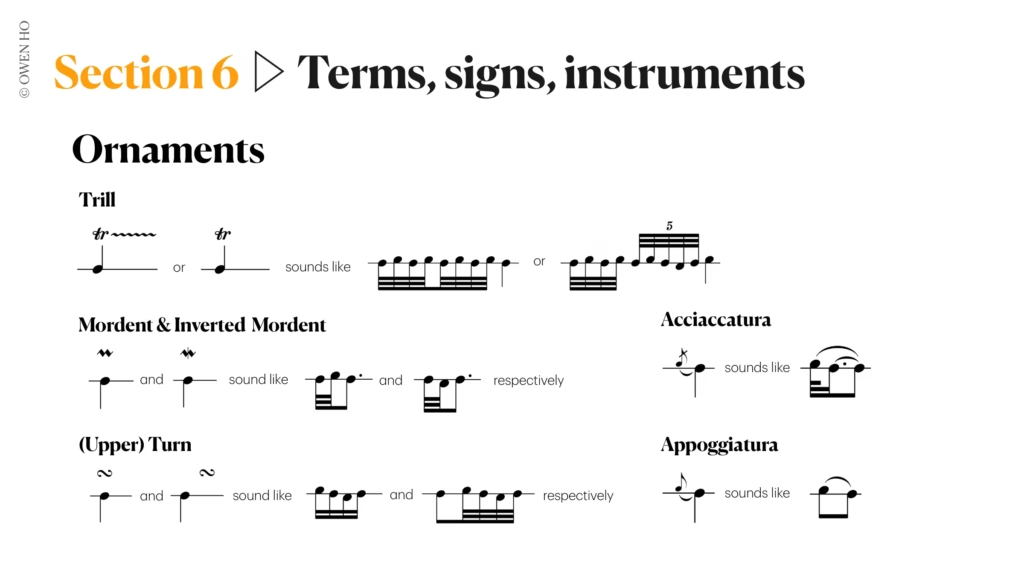
Summary Table: Ornaments
| Ornament | Sign | Effect | Example (on D) |
|---|---|---|---|
| Trill | Tr or Tr~~~ | Alternate with note above | D–E–D–E–D… |
| Mordent | Short wavy line + vertical line | Above – main – above | D–E–D |
| Inverted Mordent | Short wavy line | Below – main – below | D–C–D |
| Turn | Sideways S (𝆗) | Above – main – below – main | E–D–C–D |
| Acciaccatura | Small note with slash | Quick grace note | Play C quickly before D |
| Appoggiatura | Small note (no slash) | Takes half of main note’s value | C takes half of D’s value |
Worked Example: Identifying Written-Out Ornaments
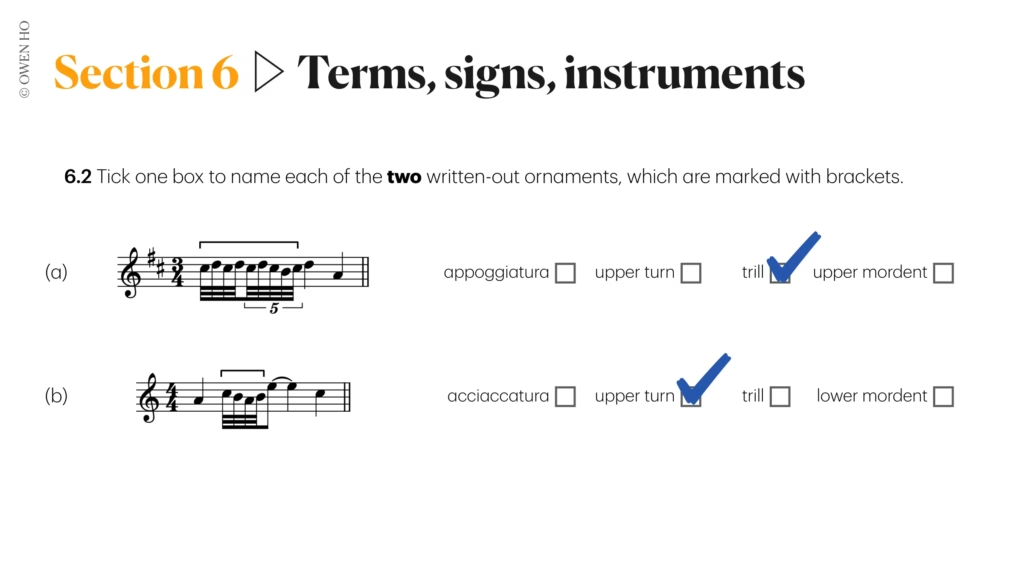
Example 1: Trill
The written-out ornament: C♯ – D – C♯ – D – C♯ – D – C♯ – D – (quintuplet ending)
Analysis: The ornament alternates between C♯ and D (the note above).
Answer: Trill
Example 2: Turn
The written-out ornament: B – A – B (with the B being the main note)
Analysis: The ornament starts with a note above the main note, goes below, then returns to the main note. This is a turn.
Answer: Turn
How to Identify Ornaments in the Exam
| Clue | Likely Ornament |
|---|---|
| Long alternation between two notes | Trill |
| Three-note ornament (above – main – above) | Mordent |
| Three-note ornament (below – main – below) | Inverted Mordent |
| Four-note pattern (above – main – below – main) | Turn |
| Tiny note with a slash | Acciaccatura |
| Tiny note without a slash | Appoggiatura |
Common Pitfalls to Avoid
- Confusing mordent and inverted mordent. Check the direction of the ornament.
- Confusing acciaccatura and appoggiatura. The slash (or lack of it) is the key difference.
- Not knowing the Italian/French/German terms. Use flashcards to build your vocabulary.
- Trying to memorise everything at once. Spread your learning over time.
Practice Makes Perfect
Understanding the theory is one thing, but exam success comes from repeated, focused practice. That’s why my interactive practice site (app.owenmusictheory.com) can make all the difference in your preparation.

Here’s how the two practice modes work:
Drill Mode: Master One Section at a Time
Drill Mode is designed for targeted practice. You get access to all the questions organised section by section, just like the real exam. This means you can:
- Focus specifically on terms, signs, and ornaments until it feels second nature
- Skip the sections you’re already confident in and spend your time where it matters most
- Practise the same question type repeatedly with virtually unlimited questions – you’ll never run out of fresh material
With instant feedback on every answer, you’ll learn from your mistakes immediately and reinforce correct answers right away.
Exam Mode: Simulate the Real Thing
When you’re ready to put it all together, Exam Mode gives you the full experience:
- Full-length papers in the exact format of the ABRSM exam
- Randomised questions each time you take a test – no two papers are the same
- A 2-hour time limit to help you build speed and stamina
- A final score and detailed feedback at the end, so you know exactly where you stand
This mode is invaluable for reducing exam-day anxiety. The more you practise under real conditions, the more confident you’ll feel when it counts.
Get Started
- Head to app.owenmusictheory.com
- Sign up free — no card required
- Try the free Pitch and Terms drills, or sit the free sample exam paper
- If it’s helping, upgrade for full access to every section and unlimited randomised papers
Grade 5 Theory is a one-time hurdle standing between you and your next practical grade. Practising smart — with realistic questions, instant feedback, and proper timed conditions — is the difference between walking in anxious and walking in ready.
Good luck!