
Reading time: 10 minutes |
Section 1.1 of the ABRSM Grade 5 Music Theory exam is all about rhythm and time signatures. In this part of the exam, you will be given three multiple-choice questions asking you to identify the correct time signature for a given bar.
To answer these questions confidently, you need to be comfortable with note values, rests, dotted and tied notes, and irregular rhythmic groupings such as triplets, duplets, quintuplets and sextuplets.
Understanding Time Signatures
A time signature tells us how the music is organised into bars.
Take 3/4, for example:
- The top number tells us the number of beats in each bar.
- The bottom number tells us which type of note represents one beat.
Therefore, 3/4 means that there are three crotchet beats in each bar.
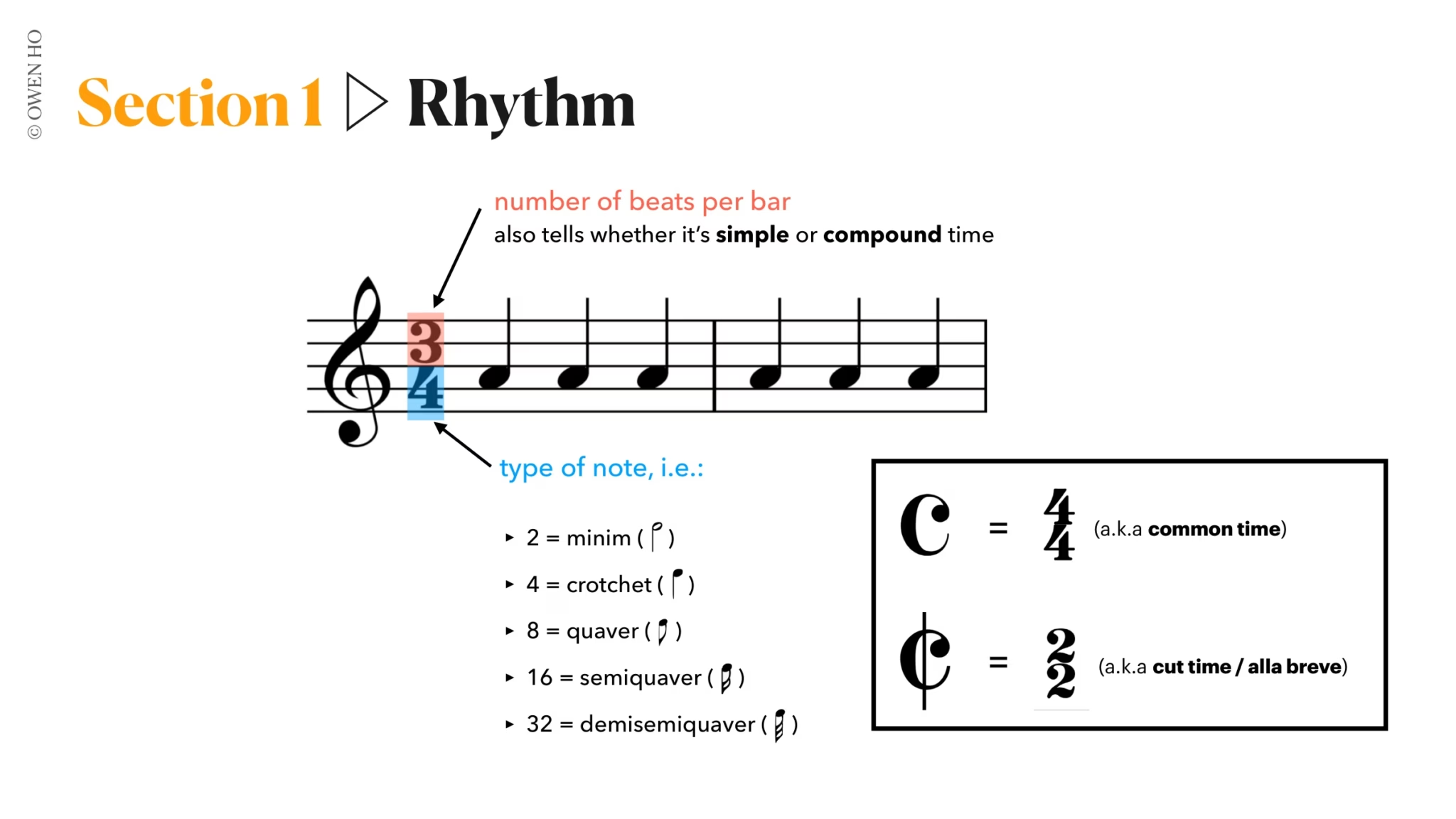
Some common bottom numbers are:
| Bottom number | Note value |
|---|---|
| 2 | Minim |
| 4 | Crotchet |
| 8 | Quaver |
| 16 | Semiquaver |
| 32 | Demisemiquaver |
There are also two special symbols to know. C represents 4/4 (common time), while C with a line through it represents 2/2 (cut time or alla breve).
Note Values and Rests
It is important to know how the different note values relate to one another:
1 breve = 2 semibreves = 4 minims = 8 crotchets = 16 quavers = 32 semiquavers = 64 demisemiquavers.
In other words, each note value is half the duration of the one above it.
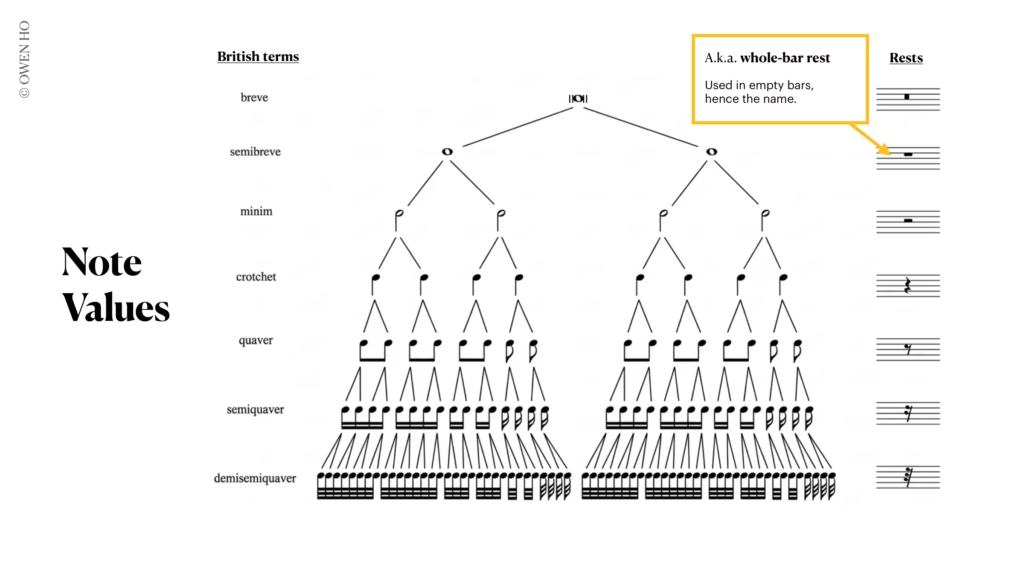
You should also recognise the corresponding rests. One particularly important point is the semibreve rest, which is also known as the whole-bar rest. It can be used to indicate a completely silent bar, regardless of the time signature.
Dotted and Tied Notes
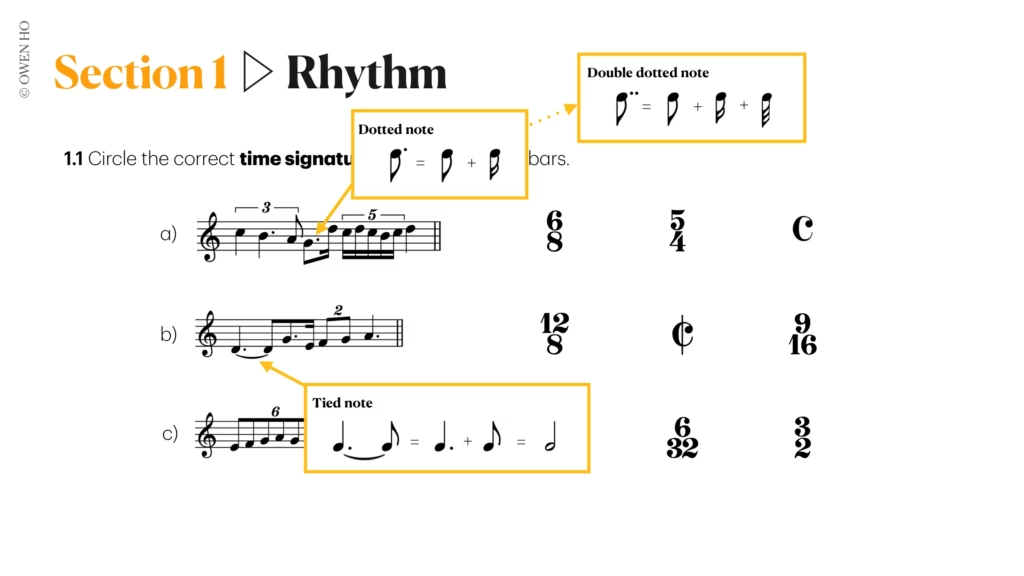
A dotted note lasts one and a half times the duration of the original note. For example: dotted quaver = quaver + semiquaver
A double-dotted note adds another half of the original note’s value: double-dotted quaver = quaver + semiquaver + demisemiquaver
Tied notes work differently: two notes joined by a tie are added together to create one continuous duration.
Tuplets
You will also need to recognise several types of irregular rhythmic grouping.
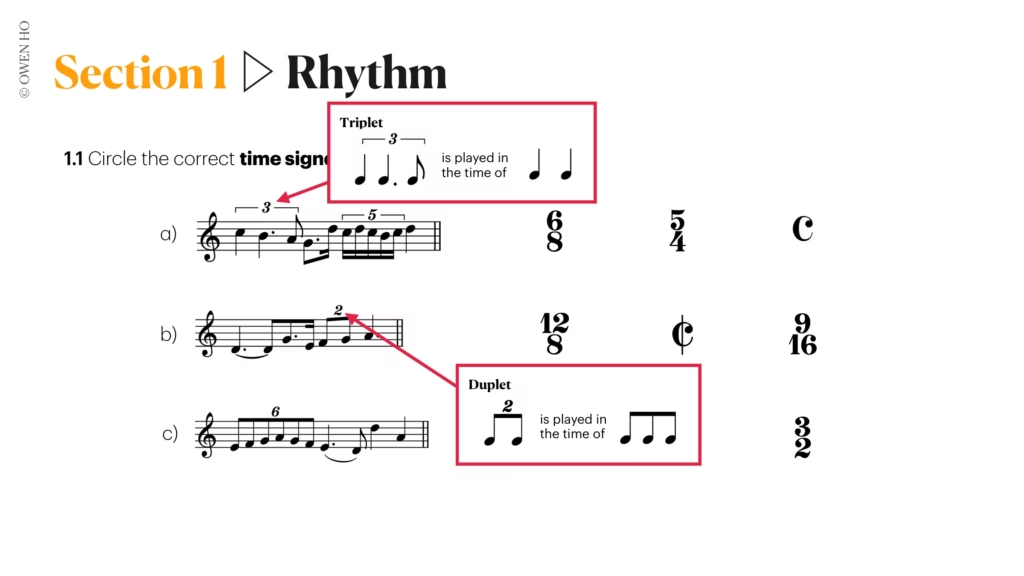
- Triplet: 3 notes played in the time normally occupied by 2.
- Duplet: 2 notes played in the time normally occupied by 3.
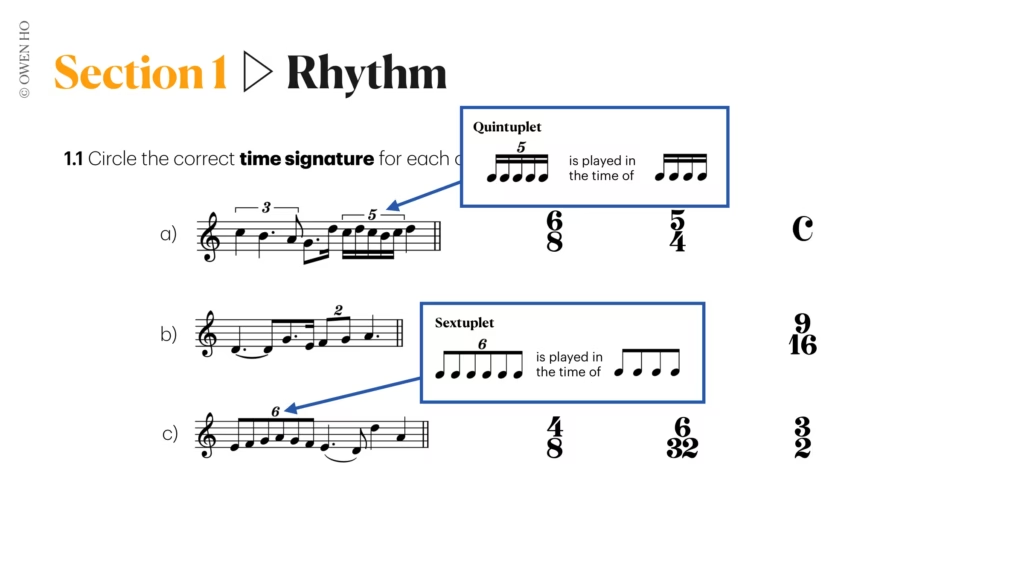
- Quintuplet: 5 notes played in the time normally occupied by 4.
- Sextuplet: 6 notes played in the time normally occupied by 4.
These can initially seem complicated, but the key is to calculate the total duration of each group before working out the time signature.
How to Approach the Questions
A useful technique is to group the notes together and convert each group into a familiar note value.
For example, in the first practice question, a triplet group initially appears complicated because it contains a crotchet, dotted crotchet and quaver. Once the values are added together, the group represents three crotchets—but because those three notes are played as a triplet, they occupy the duration of only two crotchet beats.
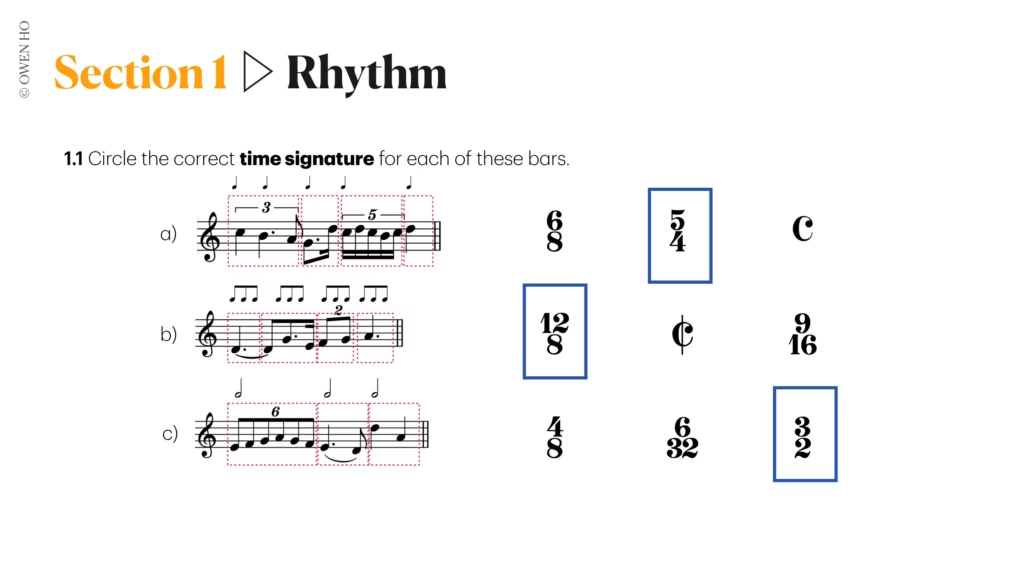
You can then calculate the remaining groups in the same way until you have the total number of beats in the bar. The three examples here lead to:
- Question A → 5/4
- Question B → 12/8
- Question C → 3/2
The important thing is not to try to recognise the time signature at a glance. Break the bar into manageable groups, calculate their durations, and then add everything together.
Practise Section 1.1
Once you understand the concepts above, the best way to improve is through practice. On my interactive practice site, you can practise Section 1.1 and other parts of the exam with instant feedback.
Drill Mode gives you access to questions section by section, so you can concentrate on a particular question type and practise it repeatedly. There are virtually unlimited questions, making it useful for targeted practice.
Exam Mode gives you complete papers in the same format as the real exam, with randomised questions each time. You have 2 hours to complete the paper, after which you receive your score and feedback.
Ready to test your skills? Try the interactive practice site at app.owenmusictheory.com and see how you get on.

Get started
- Head to app.owenmusictheory.com
- Sign up free — no card required
- Try the free Pitch and Terms drills, or sit the free sample exam paper
- If it’s helping, upgrade for full access to every section and unlimited randomised papers
Grade 5 Theory is a one-time hurdle standing between you and your next practical grade. Practising smart — with realistic questions, instant feedback, and proper timed conditions — is the difference between walking in anxious and walking in ready. Good luck!